
I still remember my first sales demo disaster. Picture this: I’m three years into running my business, finally got a meeting with this big client I’d been chasing for months. I spent weeks preparing what I thought was the perfect presentation – every feature, every benefit, every possible angle covered.
The demo itself? An absolute train wreck.
I talked for 45 minutes straight, showed them every single feature our software had, and by the end, the prospect looked like they’d rather be getting a root canal. When I finally asked if they had questions, the silence was deafening. They said they’d “think about it” – you know, that phrase that’s basically the kiss of death in sales.
Here’s what I learned the hard way: closing a sales demo isn’t about showing everything you can do. It’s about showing exactly what they need to see, when they need to see it, and then guiding them naturally toward the next step.
And honestly? The sales landscape has changed dramatically since my early fumbling days. We’re dealing with buyers who’ve completely transformed how they make decisions. Get this – 75% of B2B buyers now prefer rep-free experiences, and 81% choose vendors before ever talking to sales. That means by the time someone agrees to your demo, they’re already pretty far down the funnel.
But here’s the kicker – despite having more qualified prospects, demo-to-sale conversion rates still hover around just 10-20%, with top performers hitting 20%+. That means 8 out of 10 demos are still failing to close deals.
So what’s going wrong? And more importantly, how do you fix it?
The Modern Sales Demo Reality Check
Let me be frank about something that might surprise you. The average prospect spends only 6.5 minutes viewing demos. Six and a half minutes! That’s less time than it takes to make a decent cup of coffee.
Yet most sales reps I know still approach demos like they’re giving a college lecture. They start with company history, move through every feature methodically, and save the good stuff for the end. By then, they’ve lost their audience completely.
I’ve worked with hundreds of business owners over the past decade, and the ones who consistently close more deals understand this fundamental truth: modern buyers are 59% more likely to avoid reps who push agendas. They want partners, not pitchers.
What’s Really Happening in Your Prospect’s Mind

Here’s something that completely changed how I think about demos. The average B2B purchase now involves 6-10 decision makers. That means even if you nail your demo with one person, they still have to go back and sell it internally to a committee.
And get this – sales cycles have increased by 24%, stretching from 60 to 75 days on average. Why? Because 35% of decision-makers rank trust as the #1 reason for choosing solutions. Trust takes time to build.
This isn’t just theory for me. Last year, I watched one of my clients struggle with their demo process. They were getting great meetings, qualified prospects, but their conversion was stuck at 6%. That’s below the 8-10% minimum where you start burning out your sales team.
We dug into their process and found they were making the same mistakes I used to make – trying to impress instead of connect, showing features instead of outcomes, and ending without a clear path forward.
The Foundation: Pre-Demo Preparation That Actually Matters
You know what separates good demos from great ones? The work that happens before you ever share your screen.
Advanced Prospect Research (Beyond LinkedIn Stalking)
I used to think good prospect research meant checking out their LinkedIn profile and maybe their company website. Boy, was I wrong.
These days, you need to dig deeper. 59% of buyers say most sales professionals don’t understand them. That’s a damning statistic, but it’s also a huge opportunity.
Here’s my research framework that I’ve refined over years of trial and error:
Technographic Intelligence: What tools are they already using? You can find this through tools like BuiltWith or by simply looking at their job postings. If they’re hiring someone with Salesforce experience, they’re probably using Salesforce.
Social Intelligence: This isn’t about their vacation photos. Look for business challenges they’re discussing, industry events they’re attending, or problems they’re sharing in professional groups.
Competitive Landscape: Who are they potentially comparing you to? Understanding this helps you position yourself proactively instead of reactively.
Stakeholder Mapping: The Multi-Persona Challenge
Remember those 6-10 decision makers I mentioned? You need to know who they are before your demo starts.
I learned this lesson when I was trying to close a deal with a mid-size manufacturing company. I thought I was selling to the IT director, so I focused heavily on technical features and implementation details. Turns out, the CFO was the real decision maker, and they cared way more about ROI and cost savings than server specifications.
Create a simple stakeholder map:
- Economic Buyer: Who controls the budget?
- Technical Evaluator: Who’ll assess if it actually works?
- User Champion: Who’ll use it daily and influence others?
- Coach: Who’s rooting for you internally?
Setting Clear Demo Objectives
This might sound basic, but I’m constantly amazed how many sales reps start demos without clear objectives
.
Before every demo, I ask myself three questions:
- What specific outcome does this prospect need to see?
- What’s their biggest pain point that we solve?
- What action do I want them to take after this demo?
If you can’t answer these in one sentence each, you’re not ready to demo.
The Demo Structure That Converts: Value-First Approach
Here’s where most sales reps get it wrong. They think demos should be comprehensive tours of their product. Wrong.
Your demo should solve their biggest pain point in the first 15 seconds.
The Opening Hook: Skip the Company History
Nobody cares that you were founded in 2015 or that you’ve raised $50 million in funding. They care about their problems.
Instead, start with something like: “Sarah, you mentioned your team spends about 10 hours a week creating reports manually. Let me show you how we can cut that down to 30 minutes.”
Boom. You’ve got their attention because you’re talking about their world, not yours.
The 15-Second Rule
This is something I picked up from watching top performers. If you can’t demonstrate clear value within 15 seconds of screen sharing, you’ve lost them.
The attention span data is brutal. Prospects spend only 6.5 minutes viewing demos on average, and that’s if you’re lucky. Most people make up their minds much faster than that.
Interactive Elements: Stop Talking, Start Engaging
One of my biggest breakthroughs came when I realized demos shouldn’t be presentations – they should be conversations.
Instead of saying “Let me show you our reporting feature,” try “What would happen to your team if you could generate these reports in real-time instead of waiting until month-end?”
Then actually pause and let them answer. Use their response to guide where you go next.
70% of top-performing demos are interactive and ungated, with 10% higher engagement rates than traditional gated demos. That’s because engagement creates investment, and investment leads to ownership.
Modern Closing Techniques That Actually Work in 2025

Let me tell you about the closing techniques that actually work in today’s buyer-controlled environment. Forget everything you learned about “Always Be Closing” – that approach alienates modern buyers faster than you can say “coffee is for closers.”
The Assumptive Close (When Done Right)
The assumptive close gets a bad rap because most people do it wrong. They make assumptions about the sale instead of assumptions about the next logical step.
Wrong: “So, when do you want to start?” Right: “Based on what we’ve covered, it sounds like a pilot with your marketing team would make sense. What does your typical evaluation timeline look like?“
See the difference? You’re assuming they’re interested in moving forward, but you’re not assuming they’re ready to sign a contract tomorrow.
The Question Close Framework
This is my personal favorite because it puts the prospect in control while still guiding the conversation.
Here are the questions I use most often:
- “What excited you most about what we covered today?”
- “How do you see this fitting into your current workflow?”
- “What would need to happen for this to be a home run for your team?”
- “Who else would be involved in evaluating something like this?”
Each question serves a purpose. The first gets them talking positively about your solution. The second helps them visualize implementation. The third uncovers success criteria. The fourth maps stakeholders.
The Summary Close: Connecting Benefits to Outcomes
This is where you tie everything together, but here’s the key – don’t summarize features. Summarize business outcomes.
“So, if I understand correctly, you’re looking to reduce report generation time by 90%, give your team real-time visibility into performance metrics, and free up your analysts to focus on insights instead of data collection. Is that right?”
When they say yes, you’ve got alignment on value. Now you can move to next steps naturally.
The Sharp Angle Close (Use Sparingly)
This one’s risky, but powerful when used appropriately. It only works when you have genuine scarcity or time sensitivity.
“If I could get you set up with our Q1 implementation cohort – which includes dedicated onboarding and priority support – would that be something you’d want to move forward with this week?”
The key is authenticity. If you’re making up artificial deadlines, prospects will see right through it.
Handling Objections Like a Pro: The 2025 Framework
Objection handling has evolved dramatically. Modern buyers are more informed, more skeptical, and more collaborative in their decision-making. You can’t bulldoze through objections anymore – you need to address them with finesse.
The Four Main Objection Types
Based on my experience and industry research, almost every objection falls into one of four categories:
- Need Objections (“We don’t really need this”) These usually mean you didn’t connect your solution to a compelling business problem. Circle back to discovery and pain qualification.
Response: “I hear you. Help me understand – what made you agree to see this demo in the first place?”
- Timing Objections (“This isn’t a priority right now”) This is often about competing priorities rather than actual timing.
Response: “That makes sense. What would have to change for this to become a higher priority?”
- Trust Objections (“We need to think about it”)
These are about confidence in your solution or company.
Response: “Of course. What specific aspects would you like to think through? Maybe I can help clarify those areas.”
- Budget Objections (“It’s too expensive”) Usually, this isn’t about price – it’s about value perception.
Response: “I understand budget is always a consideration. Help me understand what you were expecting in terms of investment for a solution like this.”
Preemptive Objection Handling
The best objection handling happens before objections are raised. During your demo, address common concerns proactively.
“You might be wondering about security – that’s something every company asks about. Let me show you our compliance certifications…”
This builds confidence and shows you understand their business.
Technology Integration: Tools That Transform Your Demo Game
Let’s talk about something that’s completely changed the demo landscape – technology. The days of just using screen sharing and hoping for the best are over.
Demo Software Platforms: Your Secret Weapon
I was skeptical about demo software at first. “Why do I need special tools when I can just use Zoom?” I thought.
Then I tried platforms like Storylane, Walnut, and Supademo, and honestly? Game-changer.
These platforms offer:
- Real-time personalization with prospect logos and data
- Interactive hotspots that let prospects explore on their own
- Analytics showing exactly where prospects engage and drop off
- Follow-up automation that keeps deals moving
The ROI is clear. Companies using interactive demo platforms see engagement rates 10% higher than traditional screen shares.
But here’s where tools like LevelUp Demo really shine. Instead of just running demos, you get outcome-based tracking that shows exactly what happens after every demo. No more wondering “Did that demo work?” – you know immediately whether it converted, needs follow-up, or lost momentum.
AI and Automation: The 2025 Advantage
AI in demos isn’t science fiction anymore – it’s happening right now. I’m seeing platforms that can:
- Generate personalized demo content based on prospect data
- Provide real-time coaching during live demos
- Predict which prospects are most likely to convert
- Automate follow-up sequences based on demo behavior
The key is using AI to enhance human connection, not replace it.
Post-Demo Process: Where Deals Are Won or Lost
Here’s something that might surprise you – only 2% of sales occur at the first meeting. The average deal requires 31 touches before closure. That means your post-demo process is absolutely critical.
The 24-Hour Rule
Follow up within 24 hours. Period. No exceptions.
But not with a generic “Thanks for your time” email. Send something valuable:
- Demo recording with timestamps of key sections
- Relevant case studies or resources
- Clear next steps with specific dates
- Answers to any questions that came up during the demo
Content Sequencing Strategy
Different stakeholders need different content. Your champion needs ammunition to sell internally. The technical evaluator needs detailed specifications. The economic buyer needs ROI justification.
Map your follow-up content to stakeholder needs, and sequence it strategically over time.
This is where LevelUp Demo’s follow-up automation becomes incredibly valuable. Instead of manually tracking who needs what content when, you can set up intelligent sequences that deliver the right message to the right person at the right time.
Creating Urgency Without Being Pushy
Modern buyers hate artificial pressure, but they also need reasons to prioritize your solution. The trick is creating genuine urgency based on business impact, not arbitrary deadlines.
Cost of Inaction Approach
Instead of “This price is only good until Friday,” try “Based on what you’ve told me about manual processes, you’re probably losing about $10,000 per month in productivity. Every month you delay implementation is another $10,000 you can’t get back.”
That’s not pushy – that’s math.
Aligning with Business Cycles
Smart sales reps align urgency with prospect business cycles. If they’re planning budgets for next quarter, that’s your timeline. If they’re launching a new product, that’s your window.
Metrics That Matter: Measuring Demo Success

You can’t improve what you don’t measure. Here are the metrics I track religiously:
Conversion Metrics
- Demo-to-opportunity rate: What percentage of demos create qualified opportunities?
- Demo-to-close rate: Industry standard is 10-20%, top performers hit 20%+
- Time to close: How long from demo to signed contract?
Engagement Metrics
- Average viewing time: Are prospects staying engaged?
- Interactive engagement: Are they clicking, asking questions, participating?
- Follow-up response rates: Are people engaging with your post-demo content?
Quality Metrics
- Stakeholder coverage: Are you reaching all decision makers?
- Pain point alignment: Are you addressing their actual problems?
- Next step conversion: Do demos lead to clear next actions?
LevelUp Demo’s analytics make tracking these metrics effortless. Instead of guessing whether your demo strategy is working, you get clear data showing exactly what’s driving results.
Common Demo Mistakes That Kill Deals
Let me share the biggest mistakes I see sales reps make – mistakes that cost deals and burn out sales teams.
Feature Dumping
This is the big one. Showing every feature because you think more is better. Wrong. Prospects care about outcomes, not features.
Focus on the 2-3 features that directly solve their biggest problems. Leave everything else for later conversations.
Poor Preparation
Winging it might work for improv comedy, but it’s death for sales demos. 59% of buyers say sales professionals don’t understand them – don’t be part of that statistic.
Do your homework. Understand their business, their challenges, their goals.
Weak Opening
Starting with your company history or a feature tour. By the time you get to the good stuff, you’ve lost them.
Lead with value. Show them their problem being solved in the first 30 seconds.
No Clear Call-to-Action
Ending with “Do you have any questions?” is not a close. It’s an invitation to stall.
Always end with a specific next step: “Based on what we’ve covered, I think the best next step would be to set up a technical evaluation with your IT team. Does next Tuesday at 2 PM work for you?”
FAQ: Your Most Common Sales Demo Questions Answered
What is a good demo-to-sale conversion rate?
Industry benchmarks show 10-20% is standard, with top performers achieving 20%+ conversion rates. Below 8-10% indicates serious problems that will burn out sales teams who need to conduct 50+ demos monthly to hit quotas.
How long should a sales demo be?
Keep demos short and focused – buyers spend only 6.5 minutes viewing demos on average. Aim for 15-30 minutes maximum with clear value delivery in the first 2 minutes, as attention spans are decreasing rapidly.
Should sales demos be gated or ungated?
70% of top-performing demos are ungated, with 10% higher engagement rates than gated demos. Ungated demos allow for easier access and self-qualification, aligning with the 75% of buyers who prefer rep-free experiences.
What are the most effective sales closing techniques after a demo?
The most effective techniques include the Assumptive Close (“When would you like to start?”), Question Close (“What excited you most?”), and Summary Close (connecting benefits to outcomes). Avoid pressure tactics that alienate modern buyers.
How do I handle objections during a sales demo?
Address the four main objection types proactively: lack of need (show specific pain point solutions), timing (demonstrate cost of inaction), trust (provide social proof), and budget (focus on ROI). Use collaborative approaches rather than confrontational ones.
What technology should I use for sales demos in 2025?
Interactive demo platforms with AI personalization are becoming standard. Consider tools like Storylane, Walnut, Demostack, or Supademo that offer real-time analytics, dynamic content, and integration capabilities with your existing sales stack.
How many stakeholders should I include in a sales demo?
Modern B2B purchases involve 6-10 decision makers on average. Create demo centers with content tailored for different personas, or conduct separate demos for technical evaluators versus business stakeholders.
What metrics should I track for sales demo performance?
Key metrics include conversion rate, engagement time, drop-off points, follow-up response rates, and deal velocity. Track both individual rep performance and overall team benchmarks against the 10-20% industry standard.
How do I personalize sales demos at scale?
Use dynamic variables, industry-specific use cases, prospect logos/branding, and role-based content. AI-powered platforms can automate much of this personalization while maintaining authenticity and relevance.
What’s the best way to follow up after a sales demo?
Follow up within 24 hours with demo recording, relevant resources, clear next steps, and address any questions that arose. Use systematic approaches with templates and automation, as proper follow-up significantly impacts conversion rates.

The Path Forward: Your Demo Mastery Action Plan
Look, mastering sales demos isn’t about perfecting some magical formula. It’s about understanding that every prospect is a real person with real problems, and your job is to show them – clearly and compellingly – how you can help solve those problems.
The landscape has changed. Buyers are more informed, more skeptical, and more in control than ever before. But that’s actually good news for sales professionals willing to adapt. When you focus on serving rather than selling, on solving rather than pitching, you stand out in a world full of pushy sales reps.
Here’s my recommendation for getting started:
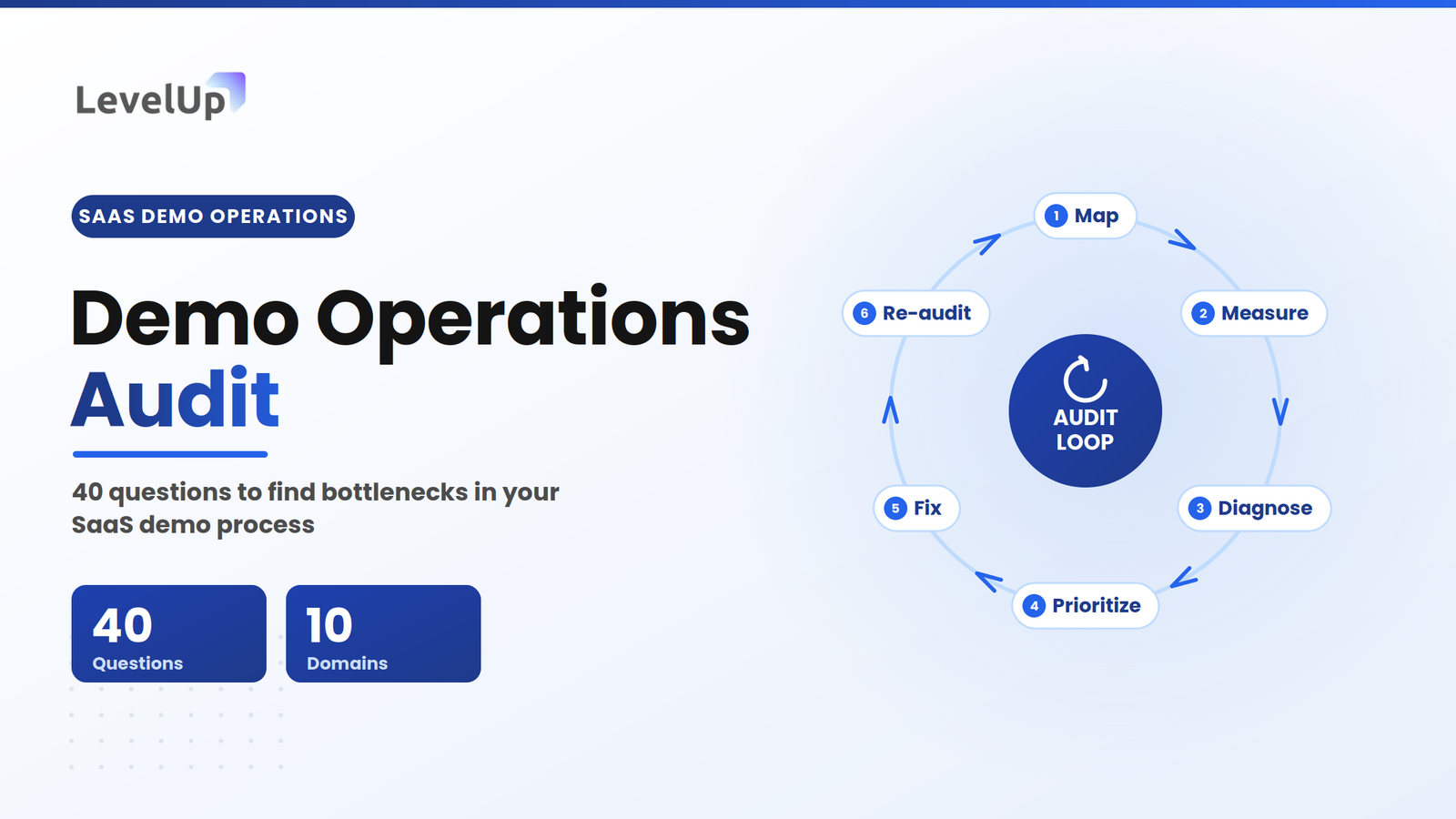
- Audit your current process against the benchmarks we’ve discussed. Are you hitting that 10-20% conversion rate?
- Update your prep work to include stakeholder mapping and pain point prioritization.
- Restructure your demos to lead with value, not features.
- Implement systematic follow-up that nurtures deals through the extended sales cycles.
- Invest in the right technology to track, measure, and improve your performance.
The best sales professionals I know treat every demo as an opportunity to learn – about their prospects, about their own presentation, and about how to improve. They’re constantly refining, constantly improving, constantly getting better.
And honestly? Tools like LevelUp Demo make this whole process so much more manageable. Instead of juggling multiple tools and wondering whether your demos are working, you get everything in one streamlined platform – scheduling, demo delivery, outcome tracking, and follow-up automation. It’s like having a sales operations team built into your demo process.
Running a business is challenging enough without having to guess whether your sales demos are effective. When you have clear data, systematic processes, and the right tools, closing deals becomes less about luck and more about execution.
The future belongs to sales professionals who can adapt to this new buyer-controlled world. The good news? You now have the roadmap to get there.
Ready to transform your demo game? The only question left is: when will you start?